You paid the repair bill, wiped away the water stains, and assumed the nightmare was over. Then, a few weeks or months later, that familiar, frustrating damp patch reappears on your drywall, or your water bill takes another unexplainable spike.
A recurring water leak is one of the most frustrating experiences a property owner can face. It feels like throwing money down a drain while watching your foundation, flooring, and peace of mind slowly deteriorate.
At Leak Detection Service Pros, we hear this complaint constantly from local property owners who hired standard plumbing services, only to watch the same issue return. The reality is simple: a leak that keeps coming back was never truly fixed in the first place. Patching a hole without addressing the systemic pressure, ground movement, or underlying pipe degradation is just placing a bandage on a compound fracture.
From our origins as a small local operation, we have expanded into a multi-team service provider equipped with integrated industry-leading leak detection tools and non-invasive diagnostic systems. We have successfully supported thousands of homeowners and businesses in Conyers and surrounding areas, earning local recognition for prompt response times and trusted service delivery by consistently maintaining high customer satisfaction through quality workmanship. We know that stopping a leak permanently requires forensic precision, not superficial patches.
1. The Red Clay Reality: Soil Shifting and Foundation Stress
In our region, the soil beneath your foundation plays a massive, often overlooked role in the life expectancy of your plumbing infrastructure. The heavy, iron-rich Georgia red clay characteristic of the area is highly expansive. During our wet, humid springs, this clay absorbs vast amounts of water and expands significantly. In the baking heat of late summer, that same soil dries out, shrinks, and pulls away from foundations and buried utility lines.
This relentless expansion and contraction cycle subjects underground piping to incredible structural stress. When a pipe under your concrete slab flexes, it creates microscopic stress fractures.
If a plumber simply digs up a single spot, sleeves a tiny section of pipe, and backfills the hole with destabilized soil, they have not solved the structural stress. The surrounding clay continues to shift, placing immense leverage on the fresh, rigid solder joint or coupling. Within months, the pipe shears right next to the brand-new repair.
- Expansive Clay Movement: Heavy wet-dry cycles cause ground swelling and contraction, placing uneven shear force on rigid underground lines.
- Improper Backfilling: Failing to support repaired underground lines with gravel or aggregate allows soil settlement to crush fresh repairs.
- Foundation Settling: Minor shifts in concrete slabs create crushing pinch points across copper or PEX supply pipes.
2. Microscopic Corrosion and Systemic Metal Fatigue
When dealing with metal plumbing, specifically copper or galvanized iron, a pinhole leak is rarely an isolated accident. It is almost always a symptom of systemic material failure.
When copper pipes age, they undergo electrolysis and chemical oxidation. High water velocity, aggressive water chemistry, or stray electrical currents grounded to your plumbing grid wear down the interior walls of the pipe. Plumbers call this “pitting corrosion.”
If a technician cuts out a two-inch section of copper that suffered a pinhole break and leaves the rest of the corroded line intact, you are on a countdown to the next failure. The water pressure inside your walls is now pushing against pipe walls that are as thin as paper just inches away from the shiny new patch.
When you hire us for residential leak repair, we do not just look at the hole; we evaluate the integrity of the entire runner to determine if a targeted section replacement or a complete line reroute is required to protect your property.
3. Excessive Municipal Water Pressure
Your indoor plumbing fixtures and pipe joints are engineered to operate safely within a specific pressure envelope, typically between 40 and 60 pounds per square inch (PSI). Municipal water supply lines, however, often pump water through main distribution networks at upwards of 80 to 120 PSI to move volume across long distances and varying terrain.
To protect your home, a Pressure Reducing Valve (PRV) is installed where the main water line enters the structure. PRVs do not last forever; their internal diaphragms degrade, stiffen, or fail completely after 7 to 10 years.
When a PRV fails, spikes in municipal water pressure stream straight into your internal plumbing system.
- Hydrodynamic Shock: Turning off a quick-closing valve (like a washing machine or dishwasher intake) sends a kinetic wave back through the pipe, blowing out weak points.
- Thermal Expansion: As your water heater warms incoming cold water, thermal expansion increases pressure if your expansion tank has failed or is missing.
- Joint Fatigue: Sustained pressure over 80 PSI continually stresses soldered elbows, compression fittings, and crimped PEX rings until the weakest link yields.
If a plumber fixes a leaking joint but fails to test your static household water pressure, that same excessive force will immediately target the second-weakest fitting in your walls.
4. Aggressive Tree Root Intrusion in Sewer and Drain Lines
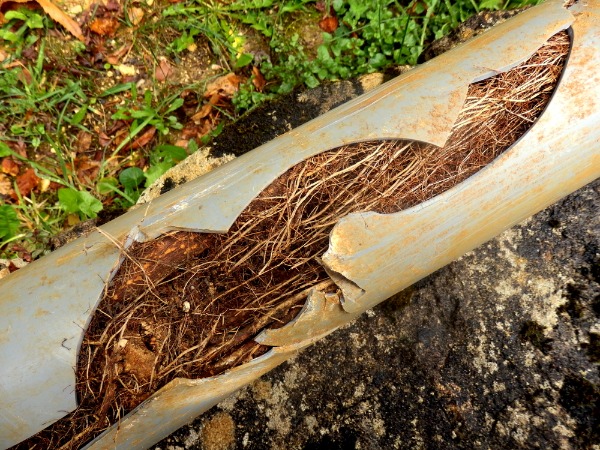
For main drain lines, sewer lines, and outdoor supply lines, tree roots are a relentless threat. Native trees like mature oaks, sweetgums, and maples feature aggressive root networks designed to hunt out underground moisture gradients.
A common mistake in commercial leak repair and residential drain service is relying solely on a drain snake or mechanical cable to clear a root blockage. A mechanical blade cuts away the root mass inside the pipe, restoring flow temporarily. However, the root collar outside the pipe remains completely alive and healthy.
Even worse, the mechanical cable leaves the original crack or offset pipe joint wide open. The tree responds to the “pruning” by sending out thousands of hyper-dense feeder roots right back into that exact same opening. Within months, the drain backs up again, leading the owner to believe the original clearing failed, when in reality, the structural breach was never sealed.
5. Surface-Level Misdiagnosis and Guesswork
The primary reason leaks return is bad diagnostics. Water is opportunistic; it follows the path of least resistance, driven by gravity, surface tension, and capillary action.
Where water pools on your subfloor, leaks through a ceiling, or darkens your basement wall is rarely where the pipe actually failed. Water can travel 30 feet along a horizontal floor joist, drop onto an electrical conduit, run diagonally across a room, and finally stain a drywall panel far removed from the actual breach.
Traditional plumbing approaches often involve cutting open drywall where the stain appears, patching whatever pipe happens to be nearby, and closing the wall back up. If that pipe was merely catching runoff from a pinhole leak six feet higher up the line, the stain will reappear as soon as the drywall dries out.
The Precision Diagnostic Solution
At Leak Detection Service Pros, we remove guesswork entirely by utilizing non-invasive diagnostic systems that pinpoint leaks within inches before a single tool touches your structure.
- Acoustic Ground Microphones: We use sensitive sonic equipment to listen for the high-frequency friction created by pressurized water escaping from pipes hidden deep underground or beneath concrete slabs.
- Thermal Imaging Technology: Infrared thermography maps subtle temperature differences across floors and walls, exposing hidden hot or cold water plumes traveling behind building materials.
- High-Resolution Inspection Cameras: Flexible, fiber-optic camera lines are navigated directly into drain systems to inspect interior pipe walls, joint connections, and structural integrity in real time.
- Tracer Gas Detection: For tiny, erratic leaks that elude acoustic sensors, we charge non-toxic tracer gas into the plumbing lines, using sensitive sniffers to track where gas escapes through the floor.
Comprehensive Repair Methodologies
When you need reliable leak repair in Conyers, GA, addressing the root cause demands tailor-made solutions for each specific pipe material and location.
Slab Leak Interventions
When pressurized water pipes fail underneath a poured concrete foundation, you face a major decision: direct repair or pipe rerouting. Direct repair involves jackhammering through the concrete slab to access the broken pipe, replacing the damaged fitting, and repouring the concrete.
However, if our diagnostic equipment reveals that the copper tubing beneath your slab is experiencing advanced pitting corrosion, jackhammering a single hole is a short-term fix. The remaining lines beneath the concrete remain vulnerable to future bursts.
In these scenarios, we often recommend a non-invasive overhead pipe reroute. We abandon the failing line beneath the slab entirely, running new, highly durable PEX piping through your walls and attic space. This permanently eliminates the possibility of future slab leaks along that run without destroying your flooring or foundation.
Main Line Trenchless Restoration
For outdoor supply lines or main sewer runs compromised by root intrusion or soil settlement, traditional excavation destroys landscaping, hardscaping, and driveways.
We utilize trenchless pipe lining technologies whenever possible. By pulling an epoxy-saturated sleeve through the existing damaged pipe and curing it in place, we create a seamless, joint-free structural pipe within the old one. Because the new liner has no joints or seams, tree roots have fewer opportunities to penetrate the restored line, helping provide long-lasting protection against recurring intrusion.
Whole-Home Pressure Regulation
Every comprehensive repair must include an evaluation of your home’s incoming water pressure. If your incoming PSI is dangerously high, we install high-capacity, dual-gauge pressure-reducing valves alongside thermal expansion tanks on your water heater. This protects your newly repaired line and stabilizes pressure across every fixture, appliance, and valve in your entire home.
Essential Steps for Property Owners Facing Recurring Leaks
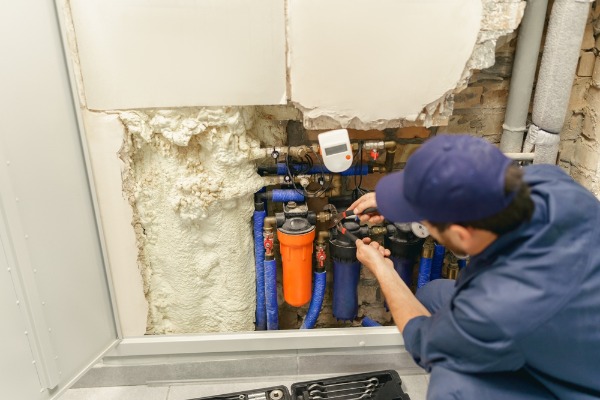
If you suspect an active or recurring leak in your home or commercial building, taking systematic action limits structural damage and saves thousands in restoration costs.
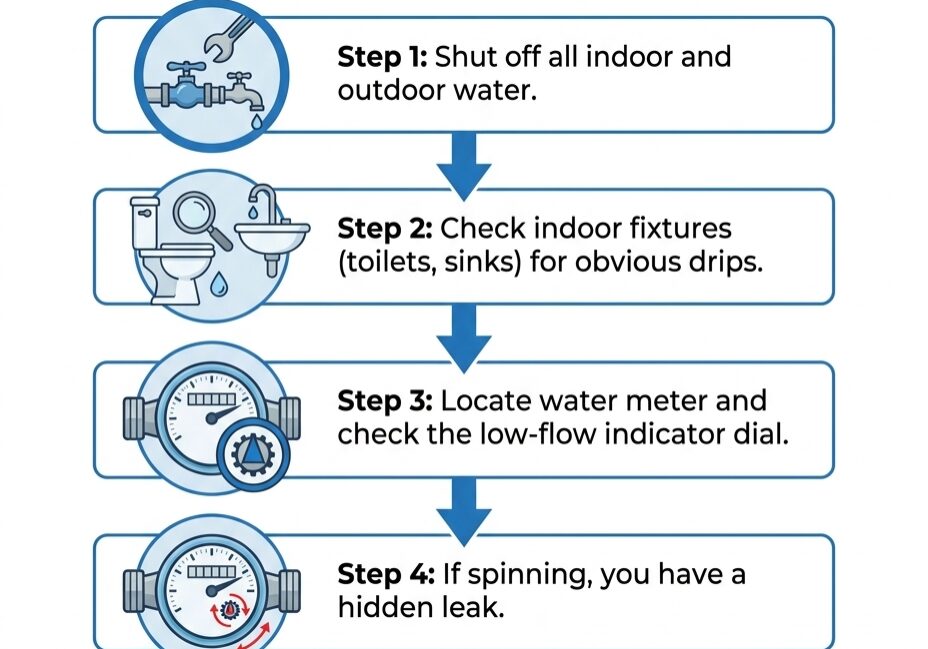
- Perform a Meter Isolation Test: Turn off every water fixture, appliance, ice maker, and irrigation valve on your property. Locate your water meter box near the street curb, open the lid, and inspect the leak indicator dial. If the dial is spinning while no water is intentionally running, water is actively escaping somewhere on your main supply line or interior plumbing.
- Check Static System Pressure: Purchase a simple pressure gauge at a local hardware store and thread it onto an outdoor hose bib. Open the spigot fully. If the gauge reads above 75 PSI, your pressure regulator has likely failed, placing your entire plumbing system at immediate risk of recurring pipe bursts.
- Track and Document Environmental Clues: Note exact patterns. Does the floor feel warm near a hallway cupboard? Does a musty odor intensify when the central air unit runs? Do you hear faint running water noises when the house is silent? Documenting these clues helps diagnostic technicians narrow down hidden issues rapidly.
- Request Non-Invasive Diagnostics: Do not permit a service team to cut open wide swaths of drywall or jackhammer flooring based on a “hunch.” Require non-invasive acoustic, thermal, or camera confirmation to ensure the repair targets the actual origin of the leak.
HVAC Condensate vs. Plumbing Leaks: A Common Confusion
A frequently misdiagnosed source of recurring domestic water damage occurs right near your heating and cooling equipment. Homeowners often weigh the decision between upgrading to modern ductless mini-split systems or maintaining traditional central air systems. While efficiency and zone control are major factors in that decision, drainage and leak prevention are equally critical considerations.
Central air conditioning systems rely on an indoor evaporator coil housed in an attic, closet, or crawlspace. As warm, humid air passes over the chilled coils, immense amounts of atmospheric moisture condense out of the air. This liquid drains into a primary condensate pan and exits the home through a narrow PVC drain line.
- Algae and Mold Clogging: Dark, warm drain lines are breeding grounds for algae and microbial slime, which form dense plugs inside the condensate pipe.
- Pan Overflow Damage: When the drain line clogs, the primary condensate pan overflows. If the secondary drain line or emergency drain pan is rusted or improperly pitched, water leaks directly onto ceiling drywall or subflooring below.
- Vibration Disconnections: Unsecured PVC drain lines can shake loose from the indoor air handler unit over time due to system vibrations, spilling water every time the cooling cycle engages.
Conversely, ductless mini-split systems utilize individual wall-mounted indoor units, each with its own direct-routed, short-distance condensate drain. While ductless systems reduce the risk of massive hidden attic overflows, their drain lines still require regular flushing to prevent water from backing up behind wall-mounted units and damaging interior paint or drywall.
When analyzing a damp spot on a ceiling or wall, our diagnostic process includes verifying whether the water originates from a pressurized water supply line, a drain pipe, or an overflowing HVAC condensate assembly.
Commercial vs. Residential Leak Dynamics
Recurring leaks in commercial properties present unique challenges compared to residential structures. Commercial buildings feature larger pipe diameters, higher operational pressures, complex backflow prevention assemblies, and extensive multi-story vertical risers.
- Elevated Operating Pressure: Commercial systems often rely on boosted pressure networks that accelerate wear on pipe fittings and solder connections.
- Multi-Story Risers: Vertical supply runs experience distinct thermal expansion and structural weight stresses that differ from residential branch loops.
- Water Hammer Risk: High-use flush valves and rapid-closing commercial solenoid valves create severe kinetic shockwaves that rattle unstrapped pipes inside utility chases.
- Diagnostic Complexity: Tracking inter-floor leaks requires specialized acoustic and vault-scanning procedures to account for concrete structural thickness.
Resolving commercial leak issues permanently requires integrated engineering solutions, such as commercial-grade water hammer arrestors, mechanical pipe restraints, and industrial-capacity pressure-reducing stations, rather than simple pipe patches.
Frequently Asked Questions
- Why does my pipe keep leaking in the exact same spot after being repaired? A pipe leaking in the same spot usually means the initial fix patched a hole without resolving underlying high water pressure, soil movement, or surrounding pipe corrosion.
- Can high water pressure cause water leaks to keep returning throughout my home? Yes, incoming water pressure above 80 PSI continually stresses pipe joints, solder seams, and appliance hoses, forcing new leaks to break out repeatedly.
- How do you find a hidden pipe leak without tearing down my drywall or concrete slab? We utilize non-invasive tools, including acoustic ground microphones, thermal imaging cameras, and tracer gas detectors, to locate leaks within inches before cutting.
- What is the difference between direct slab leak repair and overhead pipe rerouting? Direct repair jackhammers the slab to fix one broken pipe, while overhead rerouting abandons old subfloor pipes completely by running new lines through walls and attics.
- How do tree roots cause drain lines to leak repeatedly even after being cleared? Drain snakes cut away internal roots but leave external root masses intact and pipe cracks open, allowing roots to grow back through the gap quickly.
- Can a failing Pressure Reducing Valve (PRV) ruin new plumbing repairs? Yes, a broken PRV allows extreme municipal pressure spikes into your home, which easily ruptures fresh solder joints, fittings, and flexible lines.
- How can I tell if a ceiling leak is coming from a plumbing pipe or my HVAC system? Plumbing leaks typically drip continuously under constant pressure, whereas HVAC condensate leaks occur primarily when your cooling system runs during hot, humid weather.
Stop the Cycle of Recurring Leaks Today
A recurring water leak is not an inevitable mystery you have to live with; it is an engineering problem waiting for a permanent diagnostic solution. When you hire standard services that apply quick patches to complex plumbing problems, you end up paying for the exact same damage over and over again.
Whether you are dealing with an elusive slab leak, a recurring drain line backup, or an emergency pipe burst, Leak Detection Service Pros brings the advanced tools, non-invasive technology, and field-tested experience required to solve the problem once and for all. We do not stop at finding the water; we identify the structural, chemical, or pressure-based root cause that created the failure in the first place, ensuring your property stays protected long into the future.
Don’t let a hidden leak compromise your foundation, ruin your flooring, or drive up your utility bills. Protect your home or business with non-invasive diagnostics and structural repair solutions delivered by a team local property owners know and trust.
When you need reliable pipe leak repair, slab leak repair, or 24/7 leak repair, reach out to Leak Detection Service Pros today to schedule your comprehensive diagnostic evaluation and address the root cause of recurring leaks.
Recent Posts