Suspect a Hidden Wall Leak? Understanding the Diagnostic Approach
Are you noticing mysterious water stains on your drywall, leaving you searching for answers about acoustic listening vs. thermal imaging: how we pinpoint hidden wall leaks without tearing your house apart? At Leak Detection Service Pros, we know that discovering a potential plumbing issue behind your walls is stressful, especially when mid fall temperature drops begin to expose hidden vulnerabilities in your home’s infrastructure. The immediate fear for most homeowners is that finding the source will require destructive “guess and check” demolition, leaving a trail of broken drywall and expensive repairs in its wake.
Fortunately, modern diagnostic technology has completely transformed how professionals locate subsurface water issues. When you need professional leak detection, understanding the diagnostic process helps you make the best decision for your property. By relying on advanced tools rather than a sledgehammer, our technicians can look and listen through solid building materials to find the exact point of failure. This guide provides a transparent, behind-the-scenes look at how our experts choose the right non-invasive technology based on the specific symptoms your home is displaying.
How Seasonal Shifts Expose Plumbing Weaknesses in Local Homes
Hidden water leaks rarely happen overnight. They are often the result of cumulative stress on your plumbing system, and the changing seasons play a massive role in revealing these underlying weaknesses. In our experience serving the region, our team typically sees that varying seasonal humidity and sharp temperature drops contribute heavily to year-round pipe stress, making hidden leaks a persistent threat for Snellville GA area homes.
The Physics of Pipe Expansion and Contraction
Materials naturally expand when they warm up and contract when they cool down. Your plumbing system is no exception. As we transition out of summer and into cooler weather, the rapid temperature fluctuations cause the pipes hidden behind your walls, under your floors, and in your attic to shift slightly. Over years and decades, this constant microscopic movement places immense friction on joints, fittings, and older pipe materials.
Furthermore, when the heating system starts up for the first time in the season, the sudden introduction of hot air circulating through wall cavities can rapidly change the ambient temperature around cold water supply lines. This thermal shock can be the final straw for a weakened copper joint or an aging PVC connection.
Signs That a Seasonal Leak Has Developed
Because these failures happen entirely out of sight, homeowners must rely on secondary symptoms to realize a problem exists. A pattern we see often includes:
- Unexplained water bill spikes: A sudden increase in usage without a change in your daily habits is often the first red flag of a hidden supply line leak.
- Musty odors in specific rooms: Slow drain leaks create damp environments inside wall cavities, leading to persistent, localized odors.
- Discolored patches on drywall: Faint yellow or brown rings on ceilings or walls indicate water is pooling and soaking through the building materials.
- Peeling paint or bubbling wallpaper: Excess moisture breaks down the adhesive bonds in wall coverings long before standing water becomes visible.
When these signs emerge, immediate action is required to prevent structural damage. Securing professional residential leak detection services ensures that the exact point of failure is identified quickly, utilizing specialized equipment designed for the specific type of leak you are experiencing.
Acoustic Listening: Tracking High-Frequency Supply Line Vibrations
When a pressurized water line fails, it creates distinct physical reactions. Acoustic leak detection is the gold standard for locating these specific types of failures. This technology relies on highly sensitive ground microphones and acoustic sensors that amplify the high-frequency vibrations created by water escaping a pipe under pressure.
The Science of Subsurface Acoustics
Water in your home’s supply lines is kept under constant pressure, typically between 40 and 80 PSI. When a crack or pinhole develops in that pressurized environment, the water forces its way out violently. This creates a vibration that travels along the pipe itself and through the surrounding building materials. Acoustic sensors filter out ambient background noise—like traffic, appliances, or wind—to isolate these specific pipe vibrations.
The effectiveness of this method depends heavily on the relationship between pipe material, water pressure, and sound frequency. For example, metallic pipes like copper transmit high-frequency hissing sounds very clearly over long distances. Plastic pipes, such as PEX or PVC, absorb more of the acoustic energy, producing a lower-frequency “thumping” or rushing sound that requires a highly trained ear to pinpoint.
What Technicians Listen For
Our Leak Detection Service Pros technicians using acoustic equipment are trained to identify distinct audio signatures that indicate different types of leaks:
- The “Hiss” or “Whoosh”: This indicates a pinhole leak in a highly pressurized line, often found in copper piping.
- The “Splashing” Sound: This occurs when the escaping water is hitting the outside of the pipe cavity or a nearby stud.
- The “Rushing” Sound: A lower, broader sound that usually points to a larger volume leak or a failure in a plastic pipe.
While incredibly effective for pressurized lines, acoustic listening has distinct limitations. It struggles with unpressurized lines—like sewer and drain pipes—because water simply seeping out of a drain does not generate enough acoustic energy to register on the equipment. Understanding how sound frequencies reveal leaks is crucial, but it is only one half of our professional diagnostic toolkit.
Thermal Imaging: Visualizing Temperature Differentials in Slow Drain Leaks
If acoustic equipment is the stethoscope of leak detection, thermal imaging is the X-ray. When a leak is unpressurized—such as a failing shower pan, a leaking drain pipe, or a slow roof seep—it doesn’t make a sound. Instead, it alters the physical environment behind the wall. Thermal imaging cameras detect these subtle temperature differentials in building materials, allowing our technicians to “see” the moisture without removing the drywall.
Reading the Thermal Map Behind the Drywall
Thermal cameras do not actually see moisture; they see heat. When water leaks into a wall cavity, it behaves differently than the surrounding dry materials. In most cases, leaking water is cooler than the ambient room temperature. Furthermore, as that moisture begins to evaporate, the process of evaporative cooling lowers the temperature of the wet drywall or insulation even further.
When our team sweeps a thermal camera across your wall, we are looking for specific color gradients on the screen. Dry materials might appear in warm reds, oranges, or yellows, while a hidden pocket of moisture will show up as a distinct, irregular dark blue or purple patch. We recommend this visual approach because it is absolutely essential for slow drain leaks that do not produce any acoustic vibrations.
Environmental Factors and Expert Interpretation
Operating a thermal camera requires significant expertise. A novice might look at a thermal screen and mistake a missing patch of insulation or a cold air draft from the HVAC system for a water leak. Our professionals know how to manipulate the environment to make the leak stand out. We might run hot water down a suspected failing drain line to create a stark, bright red thermal signature against a cool wall, forcing the hidden leak to reveal itself visually.
By mapping the moisture pattern on the thermal screen, technicians can trace the water back to its highest point of origin, guiding them directly to the source of the failure rather than just the place where the water is pooling.
Side-by-Side Comparison: Matching the Technology to the Leak
Choosing the right tool is the most critical step in our diagnostic process. Our technicians do not guess; they assess the initial symptoms and deploy the technology that matches the suspected failure. Here is a clear breakdown of how our professionals decide between acoustic and thermal methods.
| Diagnostic Feature | Acoustic Listening | Thermal Imaging |
|---|---|---|
| Ideal Use Case | Pressurized supply lines (hot and cold water pipes) | Unpressurized lines (drains, sewers, roof leaks) |
| Diagnostic Output | Audio frequencies and amplified pipe vibrations | Visual temperature maps and color gradients |
| Primary Mechanism | Detects the physical force of water escaping under pressure | Detects evaporative cooling and temperature shifts in drywall |
| Key Limitation | Cannot detect slow, silent seeps or drain leaks | Cannot see through reflective surfaces or thick concrete slabs easily |
| Initial Symptom Match | Spinning water meter, hissing sounds, sudden pressure drop | Musty odors, visible drywall discoloration, pooling water after showers |
By understanding this matrix, you can see why a comprehensive approach requires both technologies. A single tool cannot solve every problem, but the right combination ensures pinpoint accuracy.

The Behind-the-Scenes Diagnostic Logic
When a Leak Detection Service Pros specialist arrives at your home, they follow a strict, scientific workflow to ensure nothing is overlooked. This logical approach prevents unnecessary damage and guarantees that the true source of the water intrusion is found.
- Initial visual inspection and symptom assessment: The process begins without any tools. Our technician examines the visible water damage, checks the layout of the home’s plumbing fixtures, and interviews the homeowner about when the symptoms first appeared.
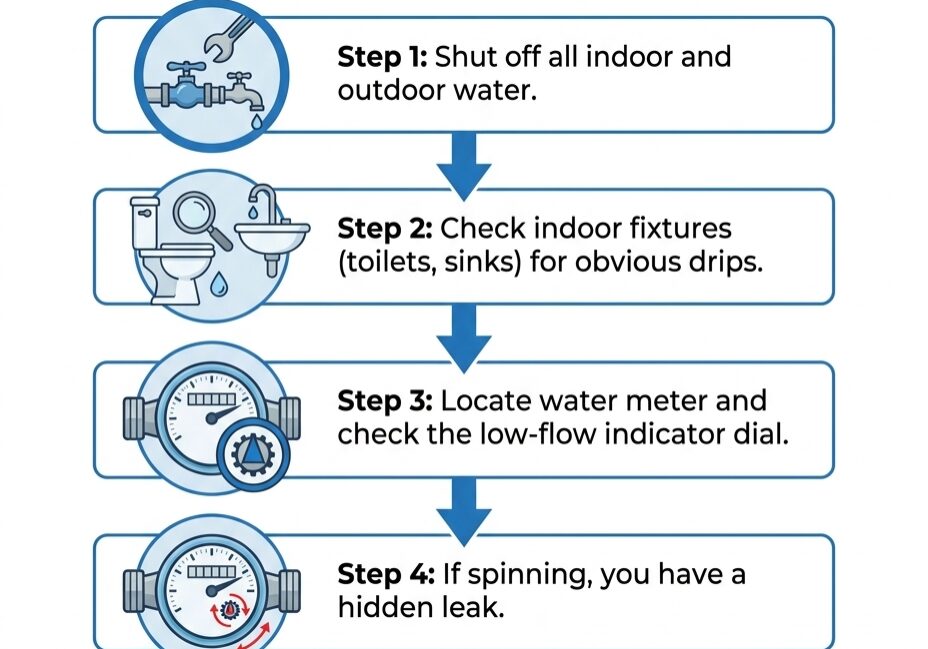
- Meter testing to confirm active water loss: Before breaking out the advanced equipment, the technician will isolate the home’s water supply and perform a static pressure test or check the municipal water meter. If the meter is spinning while all fixtures are off, a pressurized supply line leak is confirmed.
- Deploying the primary diagnostic tool: Based on the meter test, the technician makes their choice. If the meter is spinning, they deploy acoustic listening devices to trace the pressurized lines. If the meter is still, but water damage is present below a bathroom, they deploy thermal imaging to check the unpressurized drain lines.
- Cross-verifying findings with secondary methods: Our best technicians never rely on a single data point. Once a thermal camera identifies a cold spot, they might use a penetrating moisture meter to confirm the presence of actual water. Alternatively, they might utilize video pipe inspection to run a high-definition camera directly into the drain line, visually confirming the break that the thermal camera hinted at from the outside.
This multi-step verification process is what separates true diagnostic professionals from general contractors who rely on guesswork.
Preserving Your Property with Non-Invasive Methods
The ultimate benefit of these advanced technologies is the protection of your property. In decades past, finding a hidden leak meant making an educated guess and cutting a massive hole in the drywall. If the leak wasn’t there, the plumber would simply cut another hole a few feet down the line. This outdated “guess and check” demolition caused immense stress, created massive messes, and left homeowners with exorbitant restoration bills.
Today, our approach is entirely different. At Leak Detection Service Pros, we utilize non-invasive, state-of-the-art diagnostic technology to pinpoint leaks accurately without needlessly tearing up drywall. By keeping your walls, ceilings, and floors intact during the discovery phase, you avoid the cascading logistical nightmares of hiring painters, drywall finishers, and floor installers just to clean up after the plumber.
Precise pinpointing leads to significantly smaller, more manageable repair scopes. When the exact location of the pinhole or cracked fitting is known down to the square inch, our technician only needs to make a surgical opening just large enough to perform the water line repair. This targeted approach saves time, reduces material costs, and minimizes the disruption to your daily life. Hiring professionals equipped with comprehensive diagnostic tools is an investment in the preservation of your home.
Frequently Asked Questions About Hidden Wall Leaks
Can thermal imaging see water leaks behind walls?
Thermal imaging cameras do not see through walls like an X-ray, but they do detect the temperature differences on the surface of the wall caused by hidden moisture. Because wet drywall or insulation cools down differently than dry materials, the camera displays these cold spots as distinct color patterns. This allows technicians to accurately map out where water is pooling behind the drywall without making a single cut.
How do plumbers find leaks behind drywall?
Professionals use a combination of acoustic listening devices, thermal imaging cameras, and moisture meters to find leaks behind drywall without destructive testing. Acoustic sensors amplify the sound of water escaping pressurized pipes, while thermal cameras visualize the temperature changes caused by unpressurized drain leaks. By cross-referencing these non-invasive readings, they can pinpoint the exact source of the leak.
What is the best tool to find a water leak?
There is no single “best” tool; the right choice depends entirely on the type of leak. Acoustic listening devices are the best tools for finding leaks in pressurized supply lines, as they detect high-frequency vibrations. Conversely, thermal imaging cameras are the best tools for unpressurized drain or roof leaks, as they visualize the evaporative cooling process of silent water seepage.
Can acoustic leak detectors hear small leaks?
Yes, acoustic leak detectors are highly sensitive and can hear incredibly small pinhole leaks, provided the water line is under pressure. In fact, smaller pinhole leaks in highly pressurized metallic pipes often create a sharper, higher-frequency hissing sound that is easier for the acoustic sensors to isolate than a massive, low-pressure rupture.
Why do older pipes frequently leak during seasonal temperature drops?
Older pipes frequently leak during seasonal temperature drops because the sudden changes in ambient temperature cause the plumbing materials to rapidly expand and contract. This thermal shifting creates friction on aging joints, weakened solder connections, and brittle plastic fittings. When combined with the sudden heat from a furnace starting up in the fall, this stress often causes vulnerable points in the plumbing system to finally fail.
Move Forward with Accurate Diagnostics
Dealing with a hidden water issue is daunting, but understanding the technology behind the solution puts you back in control. The right diagnostic approach eliminates the stressful guesswork of hidden leaks, ensuring that the source is found quickly and accurately. Whether your situation calls for the highly sensitive audio tracking of acoustic listening or the precise visual mapping of thermal imaging, a logical, scientific approach is the best way to protect your property.
If you suspect a hidden plumbing issue in your home, do not wait for the damage to spread, and do not let anyone start swinging a hammer without a clear diagnostic plan. Contact our team at Leak Detection Service Pros, where we rely on state-of-the-art tools to serve Snellville GA area homes. By demanding precise, non-invasive diagnostics, you can secure the long-term safety of your home with confidence and peace of mind.
Recent Posts