Discovering Damp Walls Just Before the Holidays
You are right in the middle of your Late Fall / Pre-winter holiday prep, pulling boxes from the hall closet or finalizing guest room arrangements, when you spot it: a dark, damp patch blooming on the drywall. This sudden discovery is a frustrating introduction to the problem of Pinhole Leaks in Snellville: The Silent Reality of Copper Pipe Pitting. When our team at Leak Detection Service Pros responds to a sudden drop in water pressure or a mysterious wet spot just as the busy season begins, we find it is easy for homeowners to write it off as an isolated incident of bad luck or normal aging. Many assume a quick patch will solve the problem so they can get back to their seasonal planning.
However, treating a newly discovered pinhole leak as a random, one-off event is a risky approach. In our extensive experience, that single drop of water escaping through the copper is rarely an isolated failure. It is often the first visible symptom of a systemic water chemistry issue occurring inside the pipes throughout your entire house. Before you decide to simply clamp the leak and cover the drywall, you face a critical decision: treat the symptom, or investigate the underlying disease.
Understanding the root cause is the first step toward exploring permanent water line repiping solutions. To truly understand the scope of the vulnerability hidden behind your walls, you need professional leak detection to evaluate the system as a whole. Without a comprehensive assessment from our specialists, you are left guessing when and where the next leak will appear.
The Vulnerability of 1990s Plumbing in Gwinnett County
To understand why your plumbing is suddenly failing, you have to look back at the historical and regional context of your neighborhood. In our years of evaluating plumbing systems across the region, we’ve seen that the pinhole leaks appearing in Snellville and Gwinnett County are not random occurrences scattered across the map. Instead, this is a highly localized phenomenon affecting specific neighborhoods and subdivisions built during a very specific era. If your home was constructed during the massive housing boom of the 1990s, your plumbing system shares a common, underlying vulnerability with thousands of other properties our team visits locally.
The 1990s Snellville Housing Boom
During the 1990s, the region experienced a rapid expansion of residential developments. Entire neighborhoods were constructed in a relatively short timeframe to accommodate the growing population. To keep up with the demand, builders relied on the standard, trusted plumbing materials of the time. For the vast majority of these homes, that meant installing specific grades of copper plumbing for both hot and cold water supply lines.
At the time of installation, copper was considered the gold standard for residential plumbing. It was durable, widely available, and universally accepted by building codes. However, the specific grades of copper used in these rapid developments are now reaching an age where chemical vulnerabilities become highly visible. What was once a pristine network of metal pipes has been subjected to decades of internal wear, leading to an increased need for specialized plumbing services in Snellville that cater specifically to the unique needs of these era homes—a pattern our technicians encounter daily.
The Expected vs. Actual Lifespan of Copper
Homeowners are often surprised when their copper pipes fail, largely because of the enduring myth that copper lasts forever. While it is true that copper is a highly resilient material, its lifespan is heavily dependent on the environment inside the pipe.
| Plumbing Aspect | Traditional 1990s Expectation | Today’s Reality in Snellville |
|---|---|---|
| Lifespan | 50+ years of reliable service | Accelerated degradation showing at 25-30 years |
| Wear and Tear | Gradual thinning from water friction | Rapid, localized chemical pitting from the inside |
| Failure Warning | Slow drips at joints or fittings | Sudden pinhole bursts in the middle of solid pipe runs |
| Repair Approach | Replace worn sections as needed | Systemic evaluation required due to widespread vulnerability |
By contrasting the traditional 50-year expected lifespan of copper with the accelerated degradation our team sees today, it becomes clear that external factors are shortening this lifespan. The pipes are not simply dying of old age; they are reacting to the environment they have been exposed to over the last three decades.
Understanding Copper Pipe Pitting: A Chemical Reaction
When a pipe develops a leak, most people picture the metal wearing thin from the physical friction of water rushing through it, much like a river carving a canyon over thousands of years. While physical wear does occur, the pinhole leaks our experts at Leak Detection Service Pros consistently find plaguing 1990s homes are caused by something entirely different. Pitting corrosion is a localized chemical attack that creates microscopic holes in the metal.
This is a chemical issue, not just physical wear and tear. It is vital to understand how modern water treatments affect old copper pipes, fundamentally changing the internal environment of 1990s plumbing. The water flowing through your home today is chemically different from the water that flowed through those same pipes thirty years ago.
What Exactly is Pinhole Pitting?
Pinhole pitting is a highly concentrated form of corrosion. Instead of the entire pipe rusting evenly, the chemical reaction focuses on microscopic, isolated spots along the interior wall of the copper. Over time, this reaction eats away at the metal, burrowing deeper and deeper until it finally breaches the exterior wall.
These leaks are often called “silent” because the pipe looks perfectly fine on the outside right up until the moment it fails. You cannot inspect the outside of a copper pipe and predict where a pinhole will form. Once the pinhole breaches the exterior, even a microscopic hole can release a significant amount of water over time. Because the water is under constant pressure, a hole the size of a needle tip can spray a continuous mist inside your wall cavity, soaking insulation, rotting wood, and breeding mold long before you see a damp spot on the drywall.
Chemical Degradation vs. Physical Wear
To fully grasp the severity of the problem, you must differentiate between pipes wearing thin from high-velocity water and pipes being eaten away by chemical reactions.
- Physical Wear: Occurs mostly at elbows, bends, and joints where water changes direction rapidly, causing turbulence and friction.
- Chemical Degradation (Pitting): Can occur anywhere along a straight run of pipe, regardless of water velocity or turbulence. It is driven purely by the interaction between the metal and the water chemistry.
- Irreversibility: Once the chemical reaction begins, pitting is irreversible. You cannot add a chemical to the water to heal the copper or stop a pit that has already formed halfway through the pipe wall.
Because chemical degradation happens from the inside out, it is nearly impossible to predict without a professional evaluation. A pipe that feels solid to the touch on the outside may be a millimeter away from a catastrophic breach on the inside.

How Local Water Chemistry Accelerates Pipe Degradation
Connecting the scientific explanation of pitting directly to the municipal water supply is crucial for understanding why this is happening now. Municipal water treatment processes are absolutely essential for public health. They ensure that the water arriving at your tap is free from harmful bacteria, viruses, and contaminants. However, these life-saving treatments can have unintended side effects on older infrastructure.
While Georgia certainly experiences seasonal temperature shifts—from sweltering summer afternoons to freezing winter nights—the primary driver of this specific pipe degradation is the year-round municipal water chemistry. It is a constant, underlying threat regardless of the weather outside. The water chemistry does not take a break during the mild spring or autumn months; the chemical interaction is happening 24 hours a day, 365 days a year.
The Shift in Municipal Water Treatments
Water treatment standards evolved significantly after the 1990s housing boom. As populations grew and water had to travel further through municipal systems to reach outer suburbs, water authorities needed stronger, longer-lasting disinfectants. This led to the widespread introduction of chloramines.
Chloramines are created by combining chlorine with ammonia. Unlike free chlorine, which dissipates relatively quickly, chloramines remain stable in the water supply for much longer periods. This is excellent for keeping drinking water safe over long distances, but it creates a harsher chemical environment for older copper pipes.
The Loss of the Protective Patina
When a copper pipe is first installed, the water flowing through it interacts with the metal to form a natural, protective internal coating called a patina. This thin layer of oxidation acts as a barrier, preventing the raw copper from coming into direct contact with the water stream. As long as this patina remains intact, the pipe is largely protected from corrosion.
However, specific pH levels and the presence of chloramines slowly dissolve this protective barrier. Once the patina is stripped away, the bare copper is exposed directly to the water chemistry. This specific chemical interaction is what makes Snellville and Gwinnett County homes particularly susceptible. The local water chemistry, while perfectly safe for human consumption, gradually eats away at the unprotected copper, initiating the pitting process that eventually leads to pinhole leaks.
Why One Pinhole Leak is a Systemic Warning Sign
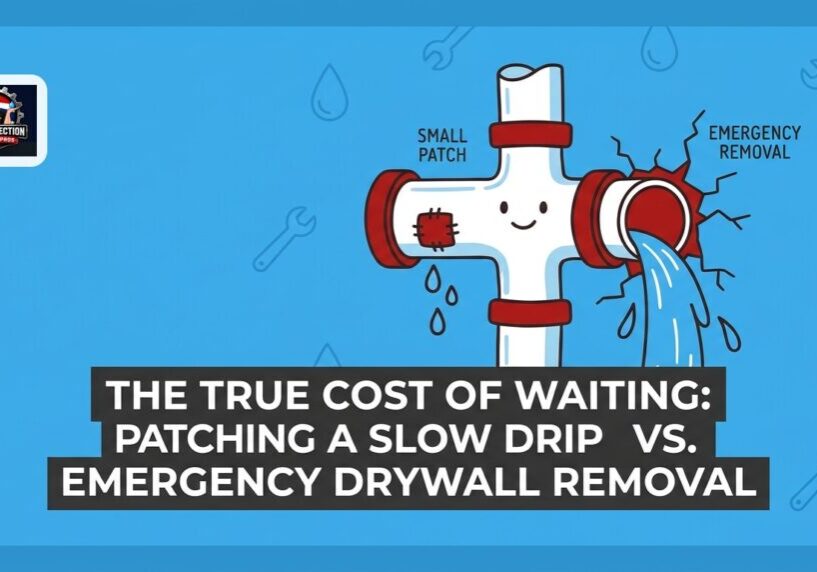
When a homeowner discovers a damp spot on the ceiling, the immediate instinct is to find the exact source of the drip, cut out that small section of pipe, and solder in a new piece. We regularly warn our clients against this “Band-Aid fallacy.” Patching a single pinhole leak often results in another leak appearing just a few inches away a few weeks later. The entire length of the pipe has been exposed to the same water chemistry for the same amount of time. If one spot has pitted all the way through, it is a virtual guarantee that the rest of the pipe is severely thinned and riddled with microscopic pits.
This reality is what makes proper pipe leak repair so critical. A professional assessment looks at the surrounding pipe health rather than just applying a temporary clamp. Attempting any DIY repair on chemically weakened copper is highly discouraged. Manipulating, cutting, or applying heat to severely pitted copper can cause the brittle metal to immediately rupture, turning a slow drip into a major flood in seconds.
The Danger of Holiday Water Pressure Spikes
The timing of these leaks is rarely convenient. In fact, they frequently become visible right during Late Fall / Pre-winter holiday prep. This is not a coincidence. As you prepare for the holidays, your household water volume and pressure demands increase drastically.
- Increased Guest Usage: Extra family members mean back-to-back showers, multiple toilet flushes, and constant sink usage, keeping the plumbing system under continuous strain.
- Heavy Appliance Cycles: Cooking large holiday meals and cleaning up afterward requires running the dishwasher and washing machine far more frequently than during a normal week.
- Pressure Fluctuations: The rapid opening and closing of valves (like a washing machine filling) creates pressure spikes, known as water hammer, that send shockwaves through the pipes.
Weakened, pitted copper is significantly less capable of handling these pressure fluctuations. A pipe that might have survived a few more months of normal usage can easily fail catastrophically under the sudden stress of holiday water demands.
Recognizing the Hidden Symptoms
Waiting for water to breach the drywall is a costly strategy. By the time you see a stain, the water has already saturated your building materials. To protect your home, you must learn to recognize the secondary signs of systemic pitting.
- Unexplained musty odors: A persistent damp or earthy smell in a specific room, hallway, or cabinet often indicates a hidden pinhole leak misting behind the wall.
- Slight drops in water pressure: If your shower suddenly lacks its usual force, water may be escaping from the supply line before it reaches the fixture.
- Sound of running water: Hearing a faint hissing or dripping sound when all faucets and appliances are turned off is a major red flag.
- Spikes in the water bill: A sudden, unexplained increase in your monthly water usage, even if you haven’t changed your habits, points directly to a hidden leak.
Mapping the Threat Without Destroying Your Home
In the past, finding a hidden leak meant making educated guesses and tearing down large sections of drywall until the wet pipe was finally exposed. This destructive “smash and grab” approach left homes looking like construction zones, adding immense stress and repair costs to an already frustrating situation. Fortunately, modern technology has revolutionized how we locate these issues.
Working with our experts at Leak Detection Service Pros means utilizing non-invasive leak detection technology to ensure that microscopic leaks behind walls can be pinpointed accurately without unnecessary drywall destruction. By leveraging advanced diagnostic tools, our professionals can map the threat cleanly and quietly, preserving your home’s interior.
Acoustic and Thermal Imaging Technology
Modern leak detection relies on sophisticated equipment that can “see” and “hear” through solid walls.
Acoustic Listening Devices: When pressurized water escapes through a microscopic pinhole, it creates a distinct, high-frequency sound. While this sound is completely inaudible to the human ear, our acoustic sensors act like highly sensitive stethoscopes. Technicians can trace the path of the plumbing behind the walls and listen for the exact location of the escaping water, pinpointing the leak down to the inch.
Thermal Imaging Cameras: Escaping water changes the temperature of the surrounding building materials. Thermal imaging cameras detect these minute temperature differences, displaying them as a color map on a screen. A hidden leak often shows up as a distinct cold or hot bloom spreading behind the drywall, allowing our technicians to visually confirm the presence of moisture without ever lifting a hammer.
Evaluating Systemic Health
These non-invasive tools do more than just find a single leak; they allow our professionals to evaluate the systemic health of your entire plumbing network. By mapping the extent of the moisture and listening to the integrity of the pipes across different zones, a comprehensive evaluation provides a clear picture of the plumbing’s remaining lifespan.
This data is invaluable for homeowners living in 1990s properties. It removes the guesswork and informs the ultimate decision on how to proceed. Instead of lying awake wondering if another pipe is about to burst, you gain the peace of mind that comes from knowing exactly what is happening behind your walls and having a clear, data-backed plan for either targeted repairs or whole-home repiping.
Frequently Asked Questions About Copper Pitting
What causes pinhole leaks in copper pipes?
Pinhole leaks in copper pipes are primarily caused by pitting corrosion, a chemical reaction between the metal and the water inside it. Over time, specific water chemistry, including pH imbalances and chloramines used in municipal water treatment, can strip away the pipe’s protective inner lining. Once this lining is gone, the water slowly eats away at the bare copper from the inside out, eventually creating a microscopic hole.
How do you find a pinhole leak behind a wall?
Finding a pinhole leak behind a wall requires specialized, non-invasive technology like acoustic sensors and thermal imaging cameras. Acoustic devices listen for the high-frequency sound of pressurized water escaping, while thermal cameras detect the slight temperature changes caused by hidden moisture. These tools allow professionals to pinpoint the exact location of the leak without needlessly tearing down sections of drywall.
Are pinhole leaks a sign to replace copper pipes?
Yes, a pinhole leak is very often a systemic warning sign that the entire copper plumbing system is deteriorating. Because the chemical reaction that causes pitting happens throughout the entire pipe network, a leak in one area means the rest of the pipes are likely severely thinned as well. While a single leak can be patched temporarily, it usually indicates that a whole-home repipe will be necessary in the near future.
Can a pinhole leak cause a pipe to burst?
While a pinhole leak itself is a tiny breach, it significantly weakens the structural integrity of the copper pipe. If the water pressure suddenly spikes—such as during heavy household usage or when an appliance valve closes rapidly—the weakened, pitted section of the pipe can split open completely. What starts as a slow, hidden mist can quickly escalate into a catastrophic burst that floods the home.
Why are pinhole leaks so common in homes built in the 1990s?
Homes built in the 1990s were outfitted with specific grades of copper piping that have now been exposed to decades of municipal water chemistry. The natural lifespan of these pipes is being accelerated by modern water treatments, causing the copper to degrade from the inside out. Because so many homes in the area were built simultaneously using the same materials, they are all reaching this critical stage of chemical vulnerability at the same time.
Does municipal water chemistry actually affect copper plumbing?
Yes, municipal water chemistry plays a massive role in the health and longevity of copper plumbing. While the water is treated to be perfectly safe for human consumption, chemicals like chloramines and specific pH adjustments can be harsh on aging metal. This constant, year-round chemical interaction slowly dissolves the protective oxidation layer inside the pipes, exposing the raw copper to pitting corrosion.
Protect Your Home Before the Holidays Arrive
The sudden appearance of pinhole leaks in Snellville and Gwinnett County is a chemical reality of aging 1990s plumbing, not just a stroke of bad luck. As you prepare your home for the upcoming season, ignoring a damp spot or a drop in water pressure can lead to disastrous consequences when your plumbing system is put under the heavy stress of holiday guests and constant usage. You deserve a clear, professional explanation of why your specific pipes are failing, rather than just a quick, temporary patch that leaves you worrying about the next leak.
To ensure your home is secure and ready for the busy months ahead, it is highly recommended to have a licensed expert evaluate the systemic health of your plumbing. By utilizing non-invasive technology, our professionals at Leak Detection Service Pros can map the true condition of your water lines and help you make an informed decision about long-term solutions. Schedule a comprehensive evaluation today and gain the peace of mind that your home is protected.
Recent Posts