That Sudden Bill Spike: Is It a Slab Leak or a Silent Fixture?
Your monthly utility statement arrives in the mail, and the water usage graph is completely off the charts. You have not filled a swimming pool, power-washed the driveway, or left a garden hose running overnight, yet the meter indicates your home has consumed thousands of extra gallons. Understanding how a warped toilet flapper mimics a major underground leak is one of the most common—and shocking—plumbing mysteries homeowners face.
When it comes to professional leak detection, finding the source of the water loss quickly is critical to protecting your property.
A sudden, massive spike in your late-fall water bill often causes immediate panic. During November, as you begin your pre-holiday season preparations, the last thing you want to deal with is a plumbing disaster. Homeowners frequently assume the absolute worst, fearing their property requires extensive, destructive excavation to fix a ruptured pipe under the foundation just as they are getting ready to host family and friends.
However, before assuming a catastrophic underground failure has occurred beneath your living room, it is crucial to rule out silent indoor plumbing failures. These hidden indoor issues can waste astonishing volumes of water completely invisibly. A typical pattern we see as professional leak detection experts is tracing these massive phantom leaks back to a deceptively simple, highly inexpensive culprit: a degraded rubber toilet flapper.
The Mechanics of a 200-Gallon Daily Water Loss
To understand how a single bathroom fixture can mimic a massive broken pipe, you have to look at the mechanics of a standard gravity-fed toilet tank. The flapper is the flexible rubber seal sitting at the very bottom of the toilet tank. Its sole job is to hold water inside the upper tank until you press the flush lever, at which point it lifts, releases the water into the bowl to clear the waste, and then drops back down to create a watertight seal so the tank can refill.
Over time, this simple rubber component takes a beating. Constant submersion in municipal water takes a toll on the material. City water treatments often contain chloramines to keep the water supply safe from bacteria, but these chemicals slowly break down synthetic rubber. Additionally, hard water minerals like calcium and magnesium can build up on the flush valve seat. This combination causes the rubber flapper to warp, harden, shrink, or develop small blisters.
Once that watertight seal is compromised, water continuously trickles from the upper tank down into the bowl. Because the tank is constantly losing water, the fill valve remains slightly open, pulling fresh water from your plumbing system to compensate. If you want to understand the sheer volume of this hidden waste, learning how a leaky toilet flapper wastes water reveals that a single warped seal can easily result in a 200-gallon daily water loss.
Because this escaping water goes straight down the drain without ever pooling on your bathroom floor, the volume loss remains completely invisible. There are no puddles to step in, no water stains on the ceiling below, and no mold growing on the drywall. The water simply glides down the porcelain trapway and into the sewer system, day and night, without ever alerting you to the problem.
Why You Never Hear the Leak
Most homeowners associate plumbing leaks with a distinct sound—the rhythmic, annoying drip of a leaky bathroom faucet or the hiss of a broken supply line. A flapper leak, however, operates differently.
- Below the water line: Unlike a dripping faucet that strikes a hard surface, a flapper leak happens entirely underwater. The water slips smoothly through the compromised seal without splashing or dripping.
- The overflow tube bypass: If the leak is severe, water may also silently spill into the overflow tube, running down the sides of the pipe without making a sound.
- Phantom flushing: The only auditory clue you might ever notice is a phenomenon known as “phantom flushing.” This happens when the tank slowly drains over several minutes or hours until the float drops low enough to trigger the fill valve. You will suddenly hear the toilet running for ten seconds to top itself off, even though no one has entered the bathroom.
Navigating High Municipal Water Costs in Your Area
The financial impact of a silent fixture leak becomes painfully obvious when the next utility bill arrives. Many local municipal water systems utilize tiered water rates to encourage conservation. This means that your base rate covers a normal household’s monthly usage, but any excess daily gallon usage pushes your household into increasingly punitive billing brackets.
In areas like Snellville GA, high municipal water costs mean that a continuous indoor leak can quickly push homeowners into these upper billing tiers. A 200-gallon daily water loss adds roughly 6,000 gallons to your monthly consumption. That extra volume does not just cost your standard rate; it is often billed at a premium penalty rate. This constant trickle easily compounds into a massive jump in monthly utility costs, perfectly mimicking the financial footprint of a fully ruptured underground supply line.
Catching the issue early prevents consecutive months of exponential utility penalties. This is why establishing a baseline for your household water usage before seasonal guests arrive is critical. When family comes to stay for the holidays, your water usage will naturally increase due to extra showers, extra laundry, and extra dishwasher cycles. If you already have a silent leak pushing you into a higher billing tier, the added holiday usage will make your next bill truly astronomical. Monitoring your baseline usage in early November helps you spot unexpected spikes before the house gets crowded.
Slab Leaks vs. Phantom Flushes: Telling the Difference
When faced with a shocking water bill, it is easy to panic and assume you need immediate slab leak repair. However, an underground slab leak typically presents distinct physical symptoms beyond just a high water bill. By contrasting the symptoms of a silent fixture leak with an actual underground pipe failure, you can properly assess your situation and avoid unnecessary stress.
| Symptom to Look For | Underground Slab Leak | Warped Toilet Flapper |
|---|---|---|
| Physical Water Damage | Water pooling around the foundation, damp carpets, or warped hardwood floors. | None. Water drains directly into the sewer system harmlessly. |
| Temperature Changes | Inexplicably warm spots on the floor (if the hot water line is leaking under the concrete). | No temperature changes in the flooring or the surrounding bathroom. |
| Water Pressure Drops | A noticeable, sudden drop in overall water pressure at your showers and sinks. | Normal water pressure throughout the house, as the toilet is gravity-fed. |
| Auditory Clues | A faint rushing or hissing sound coming from beneath the floorboards or behind walls. | Occasional “phantom flushing” as the toilet tank randomly tops itself off. |
| Structural Warning Signs | New cracks appearing in the foundation, floor tiles, or lower drywall. | No structural damage to the home whatsoever. |
Homeowners with true slab leaks are dealing with pressurized water escaping into the soil or concrete beneath their home. This displaced water has to go somewhere, which is why it often pushes up through the flooring or undermines the foundation, causing visible cracks. Conversely, a warped flapper presents only two symptoms: the high utility bill and the occasional phantom tank refill.
Understanding these distinct differences helps prevent unnecessary panic. If your water bill is sky-high but your floors are dry, your water pressure is strong, and your foundation is solid, the odds strongly favor a silent fixture leak over a catastrophic underground pipe burst.
The 5-Minute Food Coloring Diagnostic Test
Before you call for professional diagnostics, there is a highly effective way to check your fixtures. As honest leak detection experts, we actively encourage homeowners to try this 5-minute food dye test to rule out simple fixes before paying for advanced diagnostics. We want to ensure that when we do come out to your home, our specialized services are truly needed.
This simple DIY test requires no plumbing experience, no tools, and only takes a few minutes using standard household food dye. Here is exactly how to perform the test:
- Prepare the workspace: Carefully remove the heavy porcelain toilet tank lid and place it flat on a safe, soft surface like a bath mat. These lids are slippery and fragile, so handle them with care.
- Add the dye: Drop 5 to 10 drops of dark food coloring directly into the upper tank water. Blue or red food coloring works best, as yellow or green can be difficult to see against the white porcelain. If you do not have food coloring, a powdered drink mix or even a few drops of dark coffee can work in a pinch.
- Wait patiently: Do not flush the toilet. Walk away and wait 15 to 20 minutes. This waiting period is crucial because a minor flapper warp might only let a tiny trickle of water through at a time.
- Check the bowl: Return to the bathroom and look inside the toilet bowl. Do not look in the tank—look in the bowl where you sit.
- Interpret the results: If the water in the bowl is still perfectly clear, your flapper is holding a strong seal. If colored water has seeped down into the bowl, your flapper is failing, actively leaking, and needs immediate replacement.

If you discover a leak using this method, replacing the flapper is a straightforward process. You can find replacement flappers at any local hardware store, and swapping them out usually takes just a few minutes. By taking the time to perform this test, you can potentially solve a massive water loss issue without needing a professional service call.
Next Steps: When Simple Fixes Don’t Solve the Phantom Leak
What happens if you perform the food coloring test on every toilet in your home, and the water in all the bowls remains crystal clear? If the dye test is negative but your water bill remains inexplicably high, the massive water loss is occurring elsewhere in your plumbing system.
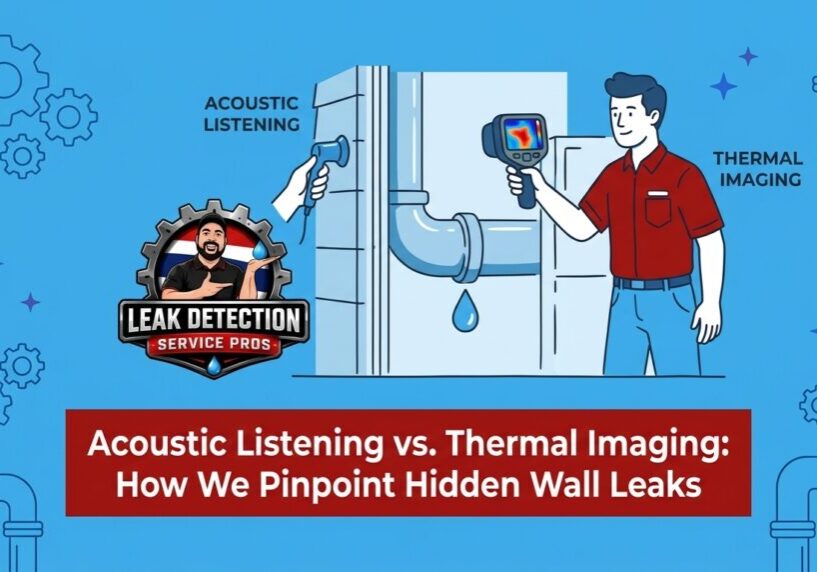
At this stage, professional intervention is absolutely necessary to locate hidden vulnerabilities behind your walls or beneath your foundation. Modern leak detection does not rely on guesswork or destructive trenching. Instead, professionals use advanced acoustic listening devices to hear pressurized water escaping from pipes buried deep under concrete. Thermal imaging cameras can detect temperature anomalies, pinpointing exactly where a hot water line is leaking behind a wall without removing a single piece of drywall.
If the leak is suspected to be in your sewer or drain lines, experts can perform a video pipe inspection to visually examine the interior of your plumbing. This high-resolution camera identifies cracks, root intrusions, and collapsed sections of pipe with pinpoint accuracy.
By taking the time to rule out the simple fixtures first, you ensure that any professional diagnostic work is truly warranted. You can move forward with confidence, knowing that the specialized equipment being brought into your home is exactly what is needed to solve the problem.
Frequently Asked Questions
Can a leaking toilet cause a high water bill?
Yes, a leaking toilet is one of the most common causes of a sudden spike in your water bill. Because the water flows directly from the tank into the bowl and down the drain, the leak is completely silent and invisible. Over the course of a month, this constant trickle can add thousands of gallons to your utility statement.
How much water does a running toilet waste?
A moderately running toilet can easily waste up to 200 gallons of water per day. If the flapper is severely degraded or the fill valve is stuck open, that number can climb even higher. This level of continuous water loss will quickly push your household into higher, more expensive municipal billing tiers.
How do I know if I have a slab leak or a toilet leak?
A toilet leak typically presents no physical damage—only a high water bill and occasional “phantom flushing.” A slab leak, on the other hand, often causes warm spots on your floor, a noticeable drop in household water pressure, damp carpets, or new cracks in your foundation and drywall.
How to test a toilet flapper with food coloring?
Carefully remove the toilet tank lid and place 5 to 10 drops of dark food coloring into the water inside the upper tank. Wait 15 to 20 minutes without flushing the toilet. If you see colored water seeping into the toilet bowl, your flapper is failing and needs to be replaced.
What causes a toilet flapper to warp and degrade?
Toilet flappers degrade over time due to constant submersion in water that contains municipal treatment chemicals like chloramines. Additionally, hard water minerals such as calcium and magnesium can build up on the rubber, causing it to harden, blister, and lose its watertight seal.
Why does my toilet occasionally refill on its own?
This phenomenon is known as “phantom flushing” and is a primary indicator of a slow leak. As water silently trickles out of the tank past a warped flapper, the water level slowly drops. Once the water level gets low enough, the float mechanism triggers the fill valve to turn on and top off the tank.
Secure Your Home’s Plumbing Before the Holidays
A sudden spike in your water usage can be terrifying, especially when you are busy preparing your home for November guests. By taking a few minutes to test your fixtures, you can often solve the mystery without unnecessary stress. If the dye test comes back clear and you still suspect a hidden underground issue, it is time to bring in the experts. Reach out for professional leak repair services to get a clear explanation of your plumbing mechanics, pinpoint the exact location of the water loss, and restore your peace of mind before the holiday season begins.
Recent Posts