Yes, you can spot a hidden water leak before toxic mold colonizes your property. You must look for non-visual signs like unexpected spikes in your monthly water bill, sudden drops in water pressure, warm spots on hardwood or tile floors, and the subtle sound of running water when all your plumbing fixtures are turned off.
At Leak Detection Service Pros, we see this story unfold constantly across Barrow and Gwinnett counties. A property owner walks down to their basement or opens a crawlspace door, only to be hit by a wall of musty air and black spore patches spreading across the subfloor. Mold thrives in dark, humid environments and can begin colonizing wet drywall or timber within 24 to 48 hours. By the time mold becomes visible on your living room baseboards, the underlying leak has likely been saturating your structure for weeks or months.
Detecting these concealed failures early is the only way to avoid thousands of dollars in structural repairs, continuous mold remediation costs, and serious health hazards. If you want to protect your property investment, you need to know how to identify hidden leaks, understand why local home design accelerates water damage, and know when to call a certified professional for precision non-invasive testing.
- Unexplained increases in your monthly utility bills without changes in daily water use.
- Warm or hot patches on tile, laminate, or concrete slab floors.
- The faint sound of trickling or hissing water when every faucet, valve, and appliance is fully shut off.
- Musty, earthy odors lingering near baseboards, under cabinets, or inside crawlspaces.
- Damp, discolored, or bubbling paint and drywall along interior or exterior walls.
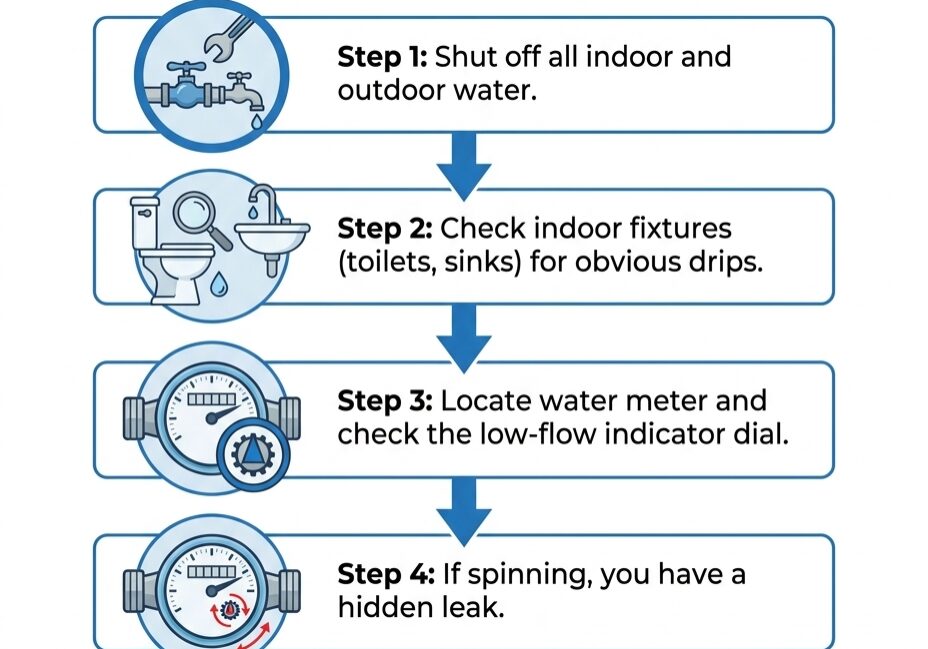
- Water meter dial movement or digital flow register shifts while the main shutoff valve inside the house is open but no fixtures are running.
Early Warning Signs of Hidden Plumbing Leaks
Hidden plumbing leaks rarely stay quiet for long. They leave a trail of subtle clues throughout your home or commercial building. Knowing how to read these signs allows you to intercept a pipe failure before spores multiply.
- Unexpected Water Bill Spikes: The first indicator of a hidden plumbing leak is rarely a puddle; it is your monthly utility statement. A continuous pinhole leak in a supply line can waste more than 10,000 gallons of water in a single billing cycle. If your water usage jumps sharply without an obvious explanation, such as filling a swimming pool or hosting long-term guests, a pressurized line is likely leaking behind a wall or underground.
- The Continuous Water Meter Test: Your municipal water meter is an effective diagnostic tool. Locate your meter box near the curb, open the lid, and check the leak indicator dial. On older analog meters, this is a small red or silver triangular flow wheel. On modern digital meters, it appears as a flow rate indicator or a tiny droplet icon. Ensure every faucet, washing machine, dishwasher, and outdoor spigot is completely off. If the flow indicator is spinning or the digital numbers are advancing, water is escaping your plumbing system.
- Acoustic Clues in Quiet Hours: Late at night, when household noise settles down, walk through your home and listen carefully near bathrooms, utility closets, and kitchen sinks. Pressurized water escaping through a pinhole crack or a degraded fitting produces a distinct low-frequency hiss, hum, or constant dripping sound. If you hear water moving behind a wall cavity when no fixtures are active, an active supply line leak is present.
- Sudden Drops in Water Pressure: If your showerhead suddenly loses pressure or your kitchen faucet sputters when opened, you may be dealing with a compromised distribution pipe. A major crack or severed line diverts water away from your fixtures, lowering the dynamic pressure throughout the rest of the building.
- Physical Floor and Wall Hotspots: A sudden, localized warm patch on your bare feet as you walk across a tile kitchen or carpeted bedroom floor is a classic sign of a hot-water line leak. Copper or PEX supply lines carrying heated water from your water heater can fracture beneath flooring material. Thermal energy transfers upward, warming the floor surface long before water breaks through the finished surface.
- Musty Odors and Damp Finishes: Smelling a damp, stale odor without seeing standing water means moisture is trapped within a closed cavity. Drywall, wall insulation, and carpet padding act like sponges. As they absorb water from a slow line leak, they emit a damp scent that signals optimal conditions for mold growth.
Moisture Traps, Red Clay, and Foundation Pressures
Every region presents unique environmental challenges to residential and commercial plumbing systems. Properties in northeast Georgia face a specific combination of native soil conditions, severe seasonal humidity, and architectural trends that make hidden leaks uniquely destructive. To catch a leak early, you must understand how local site factors interact with your piping network.
For reliable leak detection in Winder, GA, property owners must consider the expansive red clay soil underneath their foundations. Georgia red clay contains high concentrations of silicate minerals that absorb vast amounts of water during heavy rainstorms, causing the soil to expand. During hot, dry summer stretches, that same clay shrinks and bakes solid. This continuous expansion and contraction cycle creates severe ground movement, known as soil shear.
As the ground beneath a home shifts, it exerts immense mechanical stress on buried main water lines, sewer connections, and concrete slab foundations. Copper lines buried under slab foundations can rub against abrasive sub-base gravel during soil shifts. Over time, this friction wears down the pipe wall until a pinhole leak develops.
Local weather patterns compound this structural stress. The region experiences long stretches of high atmospheric humidity alongside sudden, torrential downpours. When relative outdoor humidity remains elevated, ambient air cannot absorb additional moisture easily. If a slow pipe leak introduces water into an unventilated crawlspace or wall cavity, that moisture stays trapped. The wood framing cannot dry out naturally, creating a prime environment for rapid mold reproduction.
Architectural trends also play a significant role. Many regional properties feature deep crawlspaces, poured concrete basements, or slab-on-grade foundations. Older residential builds frequently rely on galvanized steel or original copper plumbing, while mid-century and newer subdivisions feature polybutylene or early PEX installations. Galvanized lines corrode internally over decades, flaking away until thin sidewalls burst without warning. Meanwhile, polybutylene piping degrades when exposed to normal municipal water disinfectants, leading to sudden fitting fractures inside walls and ceilings.
Another crucial factor involves heating and cooling setups. Many homeowners regularly debate the efficiency of installing a ductless AC mini-split system versus sticking with a traditional central air unit. While a ductless mini-split offers targeted zone control, its secondary condensate drain lines often run directly inside interior wall cavities or out through narrow exterior wall penetrations.
If a condensate line gets clogged with algae or dust, or if a central AC unit’s primary drain pan rusts through in a hot attic, condensate water backs up rapidly. A clogged AC condensate line can discharge several gallons of water per day directly into your ceiling or wall insulation. Because central air units and air handlers are tucked away out of sight, these condensate failures often go unnoticed until ceiling drywall sags or mold appears along supply vents.
The Science of Mold Colonization from Concealed Water Exposure
Understanding how mold forms helps emphasize the urgency of early leak interception. Mold spores are naturally present in ambient outdoor and indoor air. They remain harmless until they find three basic elements: oxygen, an organic food source, and liquid moisture.
Your home is constructed from organic food sources for mold spores. Plywood subflooring, wood wall studs, paper-faced drywall, and woven carpet fibers are ideal nutrient sources. When a hidden plumbing line, fixture connection, or drain pipe ruptures, it supplies the missing ingredient: consistent, concentrated moisture.
- Initial Spore Germination (0 to 24 Hours): Once a hidden leak saturates an organic substrate like drywall or subflooring, microscopic airborne spores settle on the wet surface. Within 24 hours, these spores absorb water, swell, and sprout microscopic germ tubes.
- Hyphal Network Spreading (24 to 48 Hours): The germ tubes grow into thread-like structures called hyphae. These hyphae secrete digestive enzymes that break down the cellulose in wood and paper, allowing the fungus to feed. At this point, structural damage begins, though the growth remains invisible to the naked eye.
- Mycelium Mat Formation (48 to 72 Hours): The growing hyphae weave into a dense, visible network called a mycelium. This is when fuzzy white, green, gray, or black patches start taking over wall cavities, behind baseboards, and under subfloors.
- Active Sporulation and Air Contamination (3 to 5 Days): Mature mold structures begin producing millions of new microscopic spores. The fungus releases these spores into wall cavities and HVAC ductwork, spreading them throughout your living space. Respiratory irritants, allergens, and airborne mycotoxins circulate through your home, threatening indoor air quality and human health.
Waiting for visible mold before taking action guarantees you will face extensive structural repairs and costly mold remediation. Spotting the leak early stops this biological sequence before spore counts spike.
Specific Types of Hidden Leaks and Diagnostic Protocols
Different plumbing systems fail in different ways. At Leak Detection Service Pros, our field technicians specialize in evaluating every component of your property’s water supply and wastewater infrastructure.
Concrete Slab Leaks
Slab leaks occur when supply lines running underneath or through a poured concrete foundation rupture. Soil friction, aggressive soil chemistry, high water pressure, and thermal expansion cause these pipes to fail.
- Slab Leak Symptoms: Unexplained floor warmth, raised areas or cracks in tile and hardwood, damp carpet along floor perimeters, and the sound of continuous water movement near the foundation level.
- The Danger: Water escaping under a slab can wash away structural support soil. This leads to foundation settlement, severe concrete cracking, and water seeping up through floor slab joints.
Wall and Ceiling Interior Pipe Leaks
Supply lines feeding upper-story bathrooms, laundry rooms, and kitchens run through hollow wall framing and floor joist spaces.
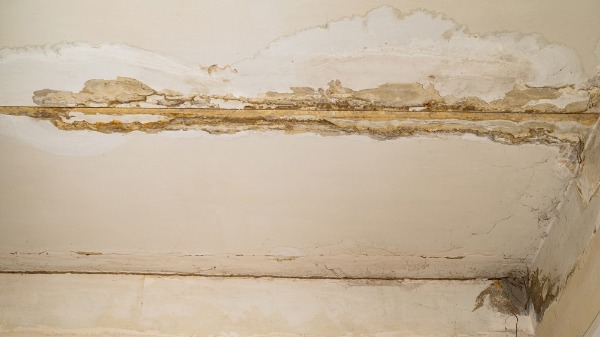
- Interior Leak Symptoms: Paint blistering, soft spots in plaster or drywall, yellow-brown water staining on ceilings, and door frames swelling or sticking out of square.
- The Danger: Gravity pulls water downward across broad areas of ceiling drywall and support framing. A single ceiling leak can ruin drywall, destroy attic insulation, short-circuit electrical wiring, and breed mold across entire floor joist bays.
Crawlspace and Subfloor Pipe Failures
Homes built over open or encapsulated crawlspaces feature extensive networks of exposed water supply lines, main drain lines, and HVAC condensate drains.
- Crawlspace Symptoms: Sagging, bouncy interior floors, buckled hardwood planking, persistent musty smells inside living areas, and high interior humidity.
- The Danger: Excessive moisture in a crawlspace rots floor joists and subflooring, rusts structural connectors, and pushes mold spores upward into living areas through the stack effect.
Sewer Line and Main Drain Failures
Wastewater lines carry used water and organic solids away from your property. Over time, these lines deteriorate due to age, ground movement, or tree root intrusion.
- Sewer Leak Symptoms: Unexplained lush, bright-green patches in the lawn, sinkholes or depressions near the driveway, slow-draining plumbing fixtures, and sewage odors around exterior foundations or basement floor drains.
- The Danger: Sewer leaks leach bacteria, pathogens, and excess water directly into the soil around your foundation. This damages foundation integrity and causes recurring drain backups inside the building.
Commercial Plumbing System Fractures
Commercial buildings present distinct leak challenges. High-occupancy structures feature complex multi-story supply loops, flushometer valves, commercial boilers, roof drain lines, and high-pressure fire suppression mains.
- Commercial Leak Symptoms: Drops in system operating pressure, unexplained utility budget overruns, water marks along suspended acoustic ceiling tiles, and damp spots on concrete slab floors in retail or office spaces.
- The Danger: Unchecked commercial leaks can damage inventory, destroy expensive equipment, create slip-and-fall liability hazards, force business closures, and cause structural damage across multi-tenant properties.
Modern Non-Invasive Leak Detection Technologies
Gone are the days when locating a hidden pipe leak meant sledgehammering through finished drywall or tearing up concrete floor slabs based on educated guesses. Today, advanced non-invasive diagnostic tools allow technicians to pinpoint concealed leaks within inches, preserving your finishes and saving time.
- Acoustic Ground Microphones and Listening Discs: When water escapes a pressurized pipe, it generates structural vibration and acoustic noise. Using ground microphones and acoustic amplifiers, technicians can listen through soil, asphalt, tile, and concrete slabs. By analyzing sound frequency changes, we can pinpoint a subsurface leak without digging up your property.
- Thermal Imaging Cameras: Infrared cameras detect fine surface temperature variations caused by hidden moisture. Water behind drywall or beneath concrete alters the thermal mass of surrounding materials. Thermal imaging reveals hot water supply line leaks as bright yellow-red plumes and cold water leaks as deep blue cool spots, exposing hidden moisture pockets without cutting into surfaces.
- Tracer Gas Leak Diagnostics: When dealing with extremely micro-sized pinhole leaks, non-pressurized sewer lines, or non-metallic PVC connections, tracer gas offers precise detection. Technicians isolate the line and inject a non-toxic mixture of 5% hydrogen and 95% nitrogen. This small-molecule gas escapes through the smallest crack, passes up through concrete or soil, and is detected at the surface using sensitive hydrogen sensors.
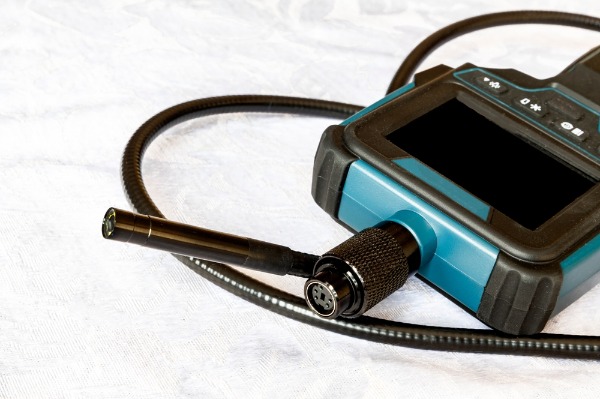
- Endoscopic Pipe Cameras: For sewer lines, primary waste drains, and wall cavities, high-definition fiber-optic inspection cameras provide clear visual answers. Technicians feed a flexible camera cable into the pipe, streaming real-time video of root intrusions, cracked sidewalls, offset joints, and standing water straight to a monitor.
- Precision Digital Pressure Decay Testing: Technicians isolate specific plumbing zones using specialized test plugs and pressure gauges. By monitoring static line pressure over a set timeframe, we can verify whether a hidden branch line has a pressure leak, ruling out false alarms before starting localized repairs.
Practical Steps for Homeowners and Property Managers
While high-tech non-invasive diagnostics are essential for locating the exact position of a hidden leak, property owners can perform routine maintenance checks to catch plumbing failures early.
Establish a Water Usage Baseline
Track your monthly utility bill volume. Keep a running record of your household’s average cubic feet or gallon usage across different seasons. If your usage jumps by 10% or more without an operational reason, schedule a professional plumbing evaluation immediately.
Inspect Under-Sink Cabinets Monthly
Open the base cabinets beneath the kitchen, bathroom, and laundry sinks. Check the supply shutoff valves, flex lines, P-traps, and garbage disposal housings for dampness, white mineral crusting, or green oxidation on copper fittings. Touch the cabinet flooring to verify it feels dry and sturdy.
Inspect HVAC Drain Systems Regularly
Whether you run a central air conditioner or a ductless mini-split system, clean and flush condensate drain lines every spring. Inspect the primary drip pan under your indoor coil for rust, debris, or standing water. Installing a safety float switch automatically shuts off your AC if the drain line clogs, preventing condensate from overflowing into your ceiling or living space.
Check Water Heater Valves
Inspect your water heater tank at least twice a year. Check the pressure relief valve, drain valve, and top inlet/outlet cold and hot connections for seepage, corrosion, or water pooling in the containment pan.
Maintain Safe Water Pressure
Excessive municipal water pressure stresses pipe joints, flexible appliance hoses, and internal fixture valves. Purchase a low-cost pressure gauge, thread it onto an exterior hose spigot, and check your pressure. If your reading exceeds 80 PSI, have a certified plumber install or adjust a pressure-reducing valve (PRV) to protect your plumbing infrastructure.
Why Choose Leak Detection Service Pros?
Choosing the right partner to safeguard your home or commercial structure makes all the difference when hidden moisture threatens your property value.
From our early days as a small local operation, Leak Detection Service Pros has grown into a multi-team service provider equipped to manage complex residential and commercial projects. We have expanded our service footprint by investing in our people, maintaining strict standards, and adopting the latest diagnostic technology available.
We have integrated industry-leading leak detection tools and non-invasive diagnostic systems across our entire fleet. Our certified technicians bring field-proven diagnostic equipment directly to your door, including thermal imaging units, tracer gas sensors, and high-frequency ground acoustic devices. We locate concealed plumbing failures quickly and accurately, without destructive digging or unnecessary property damage.
Over years of dedicated field service, we have supported homeowners and businesses in Winder and surrounding communities, protecting properties from costly foundation damage, ruined structures, and mold contamination.
We are recognized locally for prompt response times and trusted service delivery. When you suspect a hidden water leak, waiting days for an answer is not an option. Our dispatch team coordinates fast on-site service, providing clear answers, honest assessments, and effective repair paths when time matters most.
We have consistently maintained high customer satisfaction through quality workmanship. We stand behind our findings, communicate clearly at every step, treat your property with respect, and deliver lasting solutions that keep your plumbing running smoothly.
When you suspect a hidden leak, turn to the certified field experts who combine local experience with advanced diagnostic tools.
Frequently Asked Questions
How quickly can mold start growing after a hidden water leak begins?
Mold spores can germinate and begin colonizing organic building materials like drywall, carpet padding, and wood subflooring within 24 to 48 hours of water exposure. Prompt professional leak detection is critical to stopping moisture accumulation before active mold growth spreads throughout wall cavities or crawlspaces.
Will finding a hidden leak require tearing up my floors or breaking down walls?
No, modern professional leak detection utilizes non-invasive diagnostic technology such as thermal imaging cameras, acoustic ground sensors, and tracer gas detectors to locate leaks precisely. These advanced tools allow technicians to pinpoint the exact location of a hidden pipe failure without damaging your property’s finished surfaces.
What is the most accurate sign that I have a hidden slab leak?
The most reliable indicators of a slab leak include unexplained warm areas on your floor, the sound of running water when all fixtures are off, and continuous movement on your water meter dial. You may also notice sudden spikes in your water bill or fine cracks forming along floor tiles and baseboards.
Can a clogged air conditioning condensate line cause structural water damage and mold?
Yes, a clogged AC condensate line or a cracked primary drain pan can spill gallons of water directly into ceiling framing, wall cavities, or subflooring every day. Because HVAC components are often located in attics or hidden closets, these leaks frequently go unnoticed until visible drywall staining or mold growth appears.
Protect Your Property with Leak Detection Service Pros
Spotting a hidden water leak before it turns into a widespread mold infestation requires paying attention to early warning signs, understanding how local site conditions impact your home, and using professional non-invasive diagnostics. From structural slab leak detection and wall pipe scans to complete sewer leak detection and commercial leak detection, our team has the field experience and non-invasive equipment needed to locate hidden moisture fast.
Do not let a slow pinhole leak damage your foundation or compromise your indoor air quality. Contact Leak Detection Service Pros today to schedule a comprehensive residential leak detection or pipe leak detection inspection. Let our expert leak detection company pinpoint the problem, protect your structural investment, and restore your peace of mind before mold takes hold.
Recent Posts