Hidden plumbing leaks under concrete slabs do not announce themselves clearly. They often show up as rising water bills, warm floor spots, or unexplained moisture. What most property owners do not see is the constant movement of pressurized water beneath the surface. That movement creates sound patterns that travel through solid materials, including thick concrete slabs.
We rely on those sound patterns every day in our work. At Leak Detection Service Pros, we use acoustic technology to locate leaks that cannot be seen from the surface, even in dense structural conditions. For property owners searching for leak detection in Athens, GA, understanding how sound travels through plumbing systems can explain why non-invasive methods are often the most effective starting point.
How Pressurized Water Creates Detectable Sound
When water escapes through a pinhole or crack in a pressurized pipe, it does not simply drip. It moves under force, creating turbulence. That turbulence generates vibrations across a wide range of frequencies.
According to research from the National Institute of Standards and Technology (NIST), sound waves travel differently depending on the material they move through. Dense materials like concrete transmit vibration efficiently, which allows trained equipment to detect leak signatures even when they are buried several feet below the surface. These vibrations are what acoustic sensors pick up during field diagnostics.
Why Pipes “Sing” Differently Based On Material
Different plumbing materials produce different acoustic signatures when under pressure. PVC, copper, and galvanized steel all respond differently when a leak develops:
- PVC tends to produce softer, lower-frequency turbulence sounds.
- Copper often generates sharper, higher-frequency vibration patterns.
- Older metallic piping systems may produce layered resonance due to corrosion or joint wear.
These differences allow technicians to narrow down both the location and the type of plumbing system involved. This process is a key part of modern water leak detection work, especially when leaks are not visible at the surface.
Listening Through Concrete Slabs
Concrete does not block sound in the way many people assume. Instead, it transmits vibration through its structure. A leak beneath a slab creates a consistent acoustic signal that travels outward from the source point.
Specialized ground microphones and amplifiers are used to listen for:
- Constant hissing or rushing water tones.
- Frequency spikes caused by pressure escape points.
- Changes in vibration intensity across floor sections.
This method is especially useful in slab leak detection scenarios where digging or breaking concrete without confirmation would be unnecessary.
Pinpointing Small Leaks With High Sensitivity Tools
A pinhole leak can release a steady stream of water under pressure without obvious surface symptoms. Acoustic equipment helps isolate these small failure points by filtering environmental noise and amplifying leak-specific frequencies.
Technicians often move in a grid pattern across the affected area, comparing sound intensity at multiple points. The strongest signal typically aligns closest to the leak source. This method also plays a role in broader pipe leak detection work across residential and commercial systems.
How Acoustic Mapping Improves Accuracy
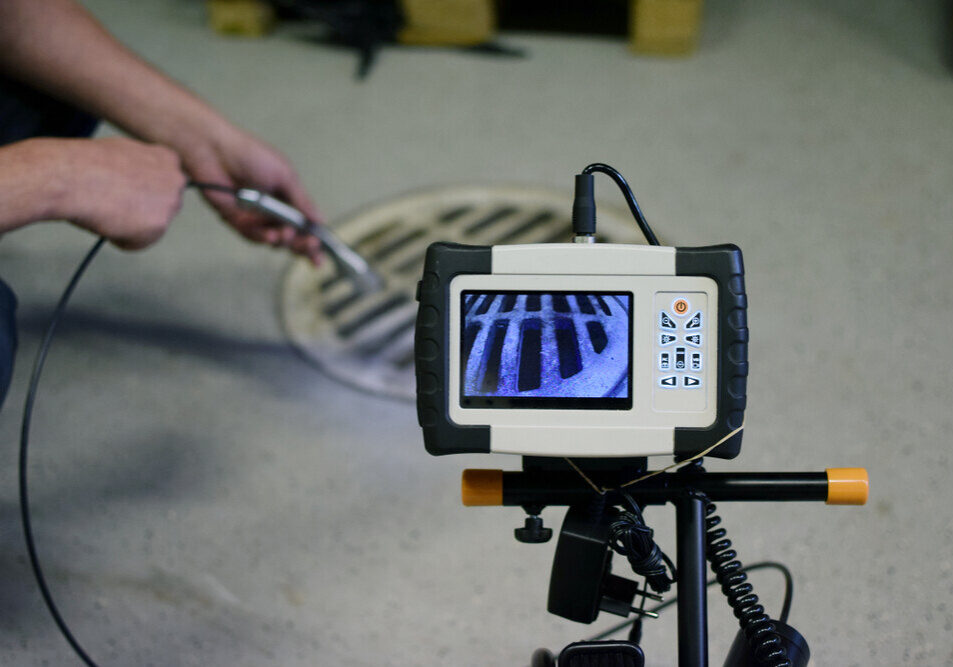
Modern leak detection equipment does not rely on sound alone. It combines acoustic readings with digital filtering and signal analysis.
Key elements include:
- Frequency filtering to isolate water movement sounds.
- Amplification of low-volume vibration signals.
- Comparison of signal strength across multiple locations.
- Real-time visualization of leak intensity patterns.
These tools reduce guesswork and allow technicians to focus on precise areas rather than broad exploratory damage.
When Hidden Leaks Become a Structural Concern
Undetected leaks beneath concrete can gradually affect surrounding materials. Soil erosion, foundation shifts, and moisture accumulation may occur when water is released continuously over time.
Property owners often seek professional diagnostics after noticing:
- Unexplained water usage increases.
- Warm or damp flooring areas.
- Persistent moisture without visible source.
- Reduced water pressure in certain zones.
In these situations, early detection plays an important role in preventing extended structural exposure to moisture.
Frequently Asked Questions
How does acoustic leak detection work?
Acoustic leak detection uses sensitive microphones to pick up sound waves created by pressurized water escaping from pipes.
Can sound really travel through concrete?
Yes. Concrete transmits vibration efficiently, which allows specialized equipment to detect leak-related frequencies beneath slabs.
What makes slab leaks difficult to find?
Slab leaks are hidden beneath concrete foundations, making visual inspection impossible without advanced detection tools.
Is acoustic detection accurate for small leaks?
Yes. When used correctly, acoustic methods can identify even small pinhole leaks by isolating consistent frequency patterns.
Leaks hidden beneath concrete do not stay silent forever, but they do stay hidden from the eye. Leak Detection Service Pros uses advanced, non-invasive acoustic technology to locate these issues with precision and minimal disruption. With expanded multi-team service capability, industry-leading diagnostic systems, and a strong record of supporting homeowners and businesses throughout the region, our team focuses on accurate results and clear reporting. If you are dealing with unexplained water loss or suspect a hidden plumbing issue, we provide detailed leak detection support built on proven field methods and consistent service quality. Drop us a line to schedule an appointment today!
Recent Posts